Construction and demolition debris, called C&D in the waste industry, is the wood, drywall, shingles, concrete, brick, metal, and flooring left over from building, remodeling, or tearing down a structure. The U.S.…
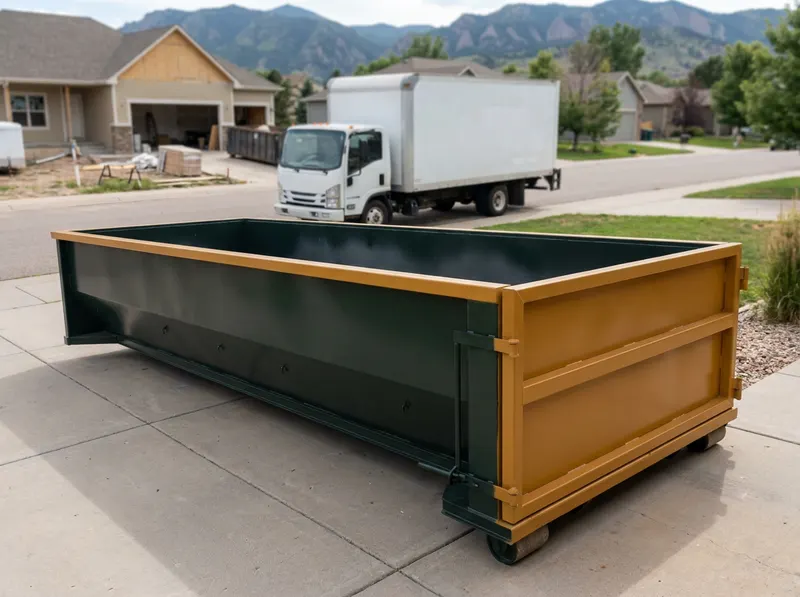
Construction and demolition debris, called C&D in the waste industry, is the wood, drywall, shingles, concrete, brick, metal, and flooring left over from building, remodeling, or tearing down a structure. The U.S. generates roughly 600 million tons of construction and demolition materials a year, and a single-family roof tear-off alone can produce 3 to 4 tons of asphalt shingles.
A roll-off dumpster is the standard container for hauling it: you load it over the open rental period, and the full price covers the haul. A dumpster rental is not junk removal, your crew loads the container, not ours.
Choosing a size comes down to debris volume and driveway space. A 10-yard container ($595) holds about 4 pickup-truck loads and suits a bathroom gut or a small deck removal.
A 20-yard ($695) holds roughly 8 loads and fits a kitchen remodel or a 1,500-square-foot roof. A 30-yard ($795) handles whole-home renovations and new framing scrap, and the 40-yard ($895) is sized for commercial demolition and large-volume light debris. If the job is a single-room cleanout, choose the 10- or 15-yard; if it is a roof tear-off or a full demo, step up to the 30- or 40-yard, the trade-off is driveway footprint versus how many trips the job avoids.
A 40-yard roll-off runs about 22 feet long, so measure the drive before delivery.
Heavy C&D materials carry weight limits that light trash does not. Concrete, brick, asphalt, dirt, and tile are dense enough that most haulers restrict them to smaller containers or dedicated clean-fill loads; the Construction & Demolition Recycling Association notes concrete and aggregate are among the most-recycled C&D streams, so separating clean concrete can keep it out of the landfill. Several materials are prohibited in any roll-off: no liquid paint, solvents, asbestos, or household hazardous waste, and no refrigerant appliances, batteries, or tires.
Scrap wood and metal are accepted; the recycling locator at Earth911 lists local metal buyers if separating scrap is worth the sort. Crews should follow OSHA 1926 construction standards when loading, keep the container below the fill line, since overloaded roll-offs cannot be legally hauled on the road.
Placement and permits matter inside Fort Collins. On private driveways in Rigden Farm, Fossil Lake Ranch, Observatory Village, or English Ranch, no permit is needed.
For a container set in the public right-of-way or street, common in Old Town where lots are tight, the City of Fort Collins requires a right-of-way permit through its engineering department, and placement in unincorporated areas falls under Larimer County. Container weight on a finished drive in Miramont, The Landings, or Ridgewood Hills can mark pavers, so plywood under the wheels is a common precaution. Jobs near Colorado State University or Harmony Crossing with limited frontage may need a shorter 10- or 15-yard that tucks against the garage.
For material-handling practices across the Front Range, the Colorado Department of Public Health and Environment publishes the state solid-waste rules C&D disposal follows.
Every job gets a firm, written price after an on-site visit.
Tell us about your construction & c&d dumpster rental job in Fort Collins and we'll send a clear, written quote, usually the same day.
 Moose Dumpster Rental